Your factory's EUDR execution system.


.svg)
.svg)



.svg)








.svg)
.svg)
.svg)
.svg)
.avif)
.avif)
.avif)
.avif)


.avif)
.avif)
.avif)
.avif)
.avif)
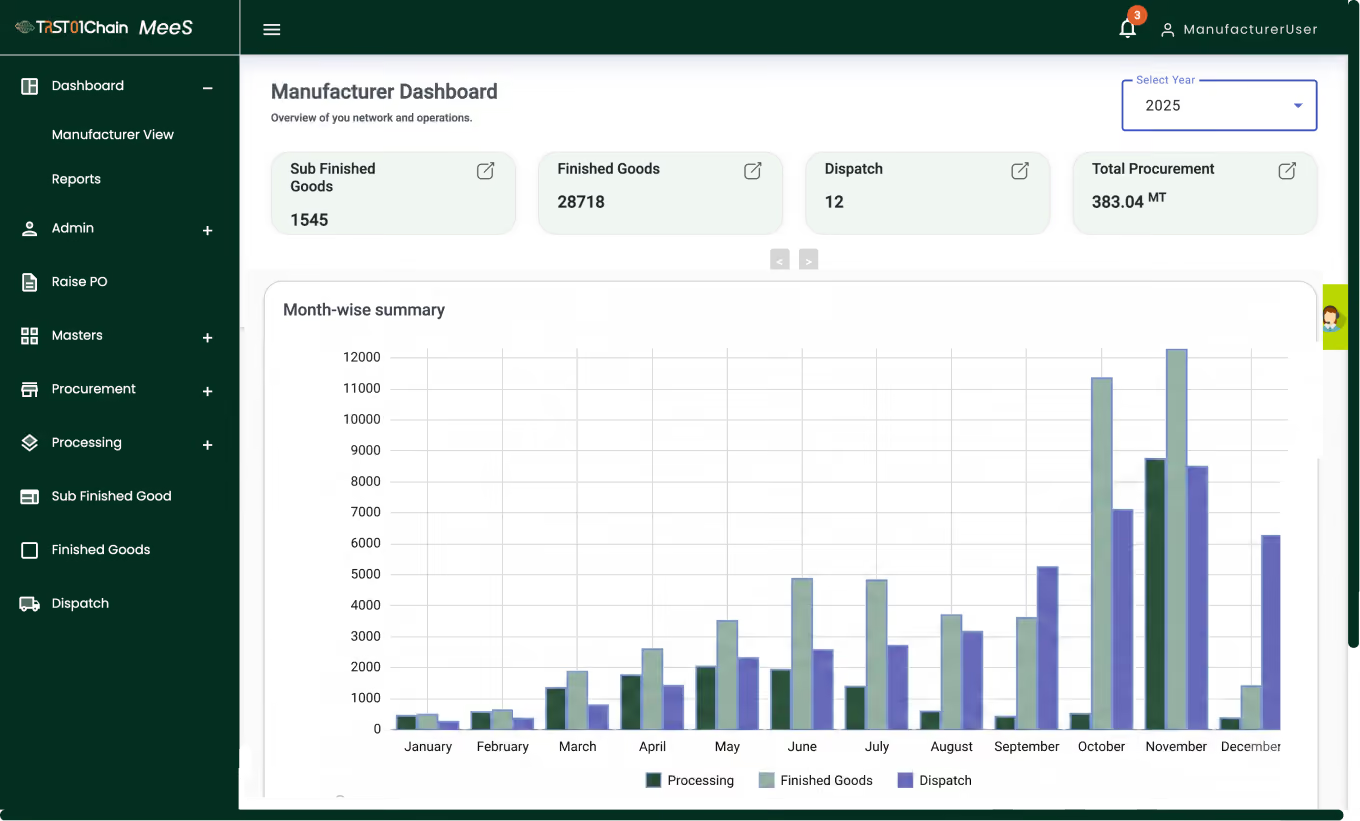
EUDR follows the commodity through the whole chain, so if your finished goods contain a regulated commodity they must be deforestation-free, legal and traceable to the plot, whether you place them on the EU market or supply a buyer who does. Your vendors provide the evidence for what they sell you; you hold it and stand behind it. MeeS collects, validates and consolidates that evidence so your finished product stays compliant.
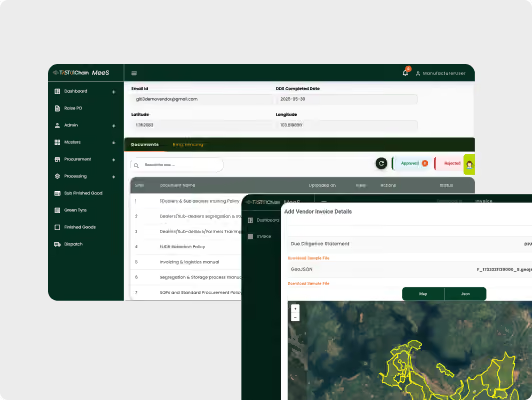
For production areas above the size threshold (generally plots over 4 hectares) a polygon tracing the boundary is expected, not just a point. Vendors supply the plot geometry as a GeoJSON file, which MeeS validates on upload, so you are checking that vendor polygons meet the standard rather than mapping any plots yourself.
In the Procurement module you raise a PO, from your ERP or manually, and the vendor is notified. They upload the polygon and DDS for that consignment, MeeS runs automatic validation, and you approve or request corrections. A Goods Receipt Note (GRN) is generated on shipment, so evidence is tied to each specific consignment.
Ring fencing means onboarding a vendor's full plot base and risk-vetting it once, on legal, social and environmental risk, so only pre-approved plots can be used on future purchase orders. It cuts repeat checking and keeps unvetted land out of your chain.
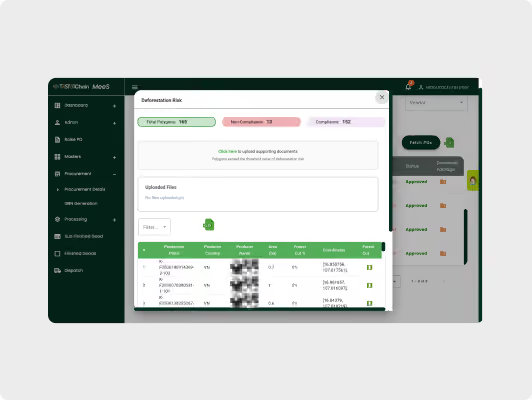
Every vendor upload passes four automatic checks: GeoJSON sanity, forest-cut analysis (against WDPA, DOPA and Global Forest Watch on Sentinel-2 data), a yield test, and ring fencing. Anything that fails is flagged and kept out of the consignment before goods are received or production starts, and you approve or reject with the results in front of you.
When a vendor uploads a polygon, MeeS assesses that plot against the 31 December 2020 baseline using the EU-referenced layer plus supporting layers, with deforestation detected by an ML model on Sentinel-2 satellite data. It returns a plot-level compliant or at-risk verdict that feeds your approval decision. MeeS never maps farms; it validates the plots your vendors supply.
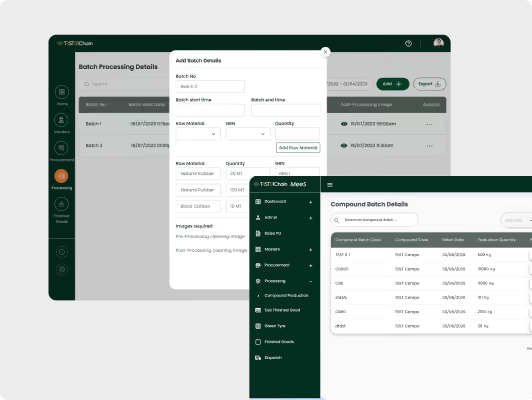
The Manufacturing module enforces batch-level segregation with QR-code tracking from intake to finished product, so lots stay identifiable rather than blended. EUDR does not allow mass-balance mixing, and this segregation is how MeeS honours it: only accepted, validated inputs flow into an EU-bound batch.
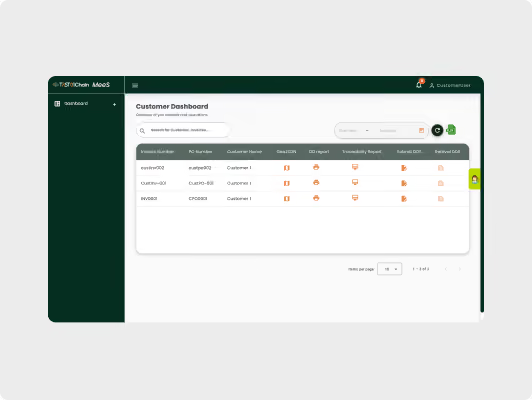
When a finished product draws on several vendors and origins, MeeS merges the plot geometry into a consolidated GeoJSON and generates a single Due Diligence Statement for the finished product, built from the validated vendor evidence and the input-to-output mapping. It is delivered via the customer portal or pushed to EU TRACES NT by API.
No. Integration with SAP, Oracle, NetSuite, Tally and others is available via API so PO, GRN and invoice data flow with no double entry, but it is optional. You can also capture production data by FTP or Excel upload, and add integration later.
Yes. The free EUDR Polygon Checker lets you validate a supplier's GeoJSON and screen deforestation risk with no commitment, a simple way to test vendor data you already hold. From there, the full platform adds vendor management, the validation gate, internal traceability and consolidated documents.