EUDR Coffee : Between the Cup and the Lip
Soluble Coffee Enters EUDR Scope, War Disrupts the Trade and Why Traceability Now Matters More Than Ever
The European Union remains the largest consumer of coffee in the world, accounting for roughly 31% of global consumption. That demand, paired with the EU Deforestation Regulation (EUDR), continues to reshape how coffee-producing countries trade with Europe. The EUDR is designed to keep products linked to deforestation out of the EU market, making compliance essential for any exporter wanting continued access to the lucrative European market.
Two years on from our first look at this regulation, the picture has shifted in two important ways. First, the European Commission has now moved to close a long-standing loophole by bringing soluble (instant) coffee into scope. Second, a fresh wave of conflict-driven supply chain disruption, from the Black Sea to the Strait of Hormuz, is layering cost and uncertainty on top of an already demanding compliance regime. The proverb still holds: there is many a slip between the cup and the lip.
Where Things Stand: The 2026 Deadlines
After two delays and intense stakeholder debate, the EUDR timeline is now fixed. Large and medium-sized companies must comply from 30 December 2026, with micro and small operators (outside the timber sector) following on 30 June 2027. The regulation entered into force in June 2023 and requires operators and traders placing seven core commodities — cattle, cocoa, coffee, palm oil, rubber, soy and wood — and their derived products on the EU market, or exporting from it, to prove the goods are deforestation-free, legally produced, and covered by a due diligence statement.
In April 2026, the Commission published a simplification review intended to reduce annual compliance costs for affected companies by around 75% compared with the original framework, alongside an updated guidance document and FAQ. Crucially, there was no further delay, the message to industry is that the December 2026 date is real, and the window to finalise supply chain mapping, documentation systems and supplier engagement is now open.

The Big Change: Soluble Coffee Comes Into Scope
From the outset, coffee was covered by the EUDR in almost all its forms ; green, roasted, decaffeinated, and extracts and concentrates. But instant (soluble) coffee had been excluded, for reasons that were never entirely clear. Industry experts and the European Coffee Federation (ECF) had long flagged this as a loophole: producers could process potentially non-compliant beans abroad and import the finished soluble product into the EU without facing the same deforestation scrutiny applied to green beans.
The Commission’s draft delegated act now proposes to close that gap. It adds “Extracts, essences and concentrates of coffee” (HS 2101 11 00) to Annex I, pulling a far broader range of products into scope liquid coffee concentrates, coffee flavouring agents, espresso powders used in food manufacturing, and coffee syrups and pastes. The Commission’s reasoning is that the earlier exclusion created a fragmented, incoherent approach for the coffee sector. The ECF, which had itself advocated for inclusion to ensure fair competition and consistent standards, has broadly welcomed the move as a step towards a more workable framework. The draft was open for public feedback until 1 June 2026.
For anyone who manufactures, imports or sells instant coffee or its derivatives into the EU, the practical consequence is significant: products that were previously outside the regulation must now be brought into a full due diligence system.

Why Soluble Coffee is Harder to Trace
Bringing soluble coffee into scope is conceptually clean but operationally complex, for three reasons.
Longer chain of custody. Soluble coffee is a heavily processed derivative. The journey from farm to extraction facility to EU border involves more handoffs than green beans, so the traceability trail is correspondingly longer and harder to verify.
Mass-balance blending. Instant coffee production typically blends beans from many origins to maintain consistent flavour. Under the EUDR, each component of that blend must be confirmed as deforestation-free. A substantial logistical challenge for large-scale plants drawing from dozens of sources.
Upstream geolocation. Manufacturers of processed extracts must now provide geolocation data pinpointing the exact plots where the underlying beans were grown. This pushes traceability requirements all the way back up a chain that, until now, many soluble producers had never had to map.
In short, manufacturers will need robust digital product passports that track coffee from farm plot through extraction to the EU border. Industry voices are urging the Commission for a transition buffer to integrate these newly covered products into existing systems.
Major Producers and the Stakes for Exporters
Coffee production spans some seventy countries. Brazil and Vietnam lead global output, with Indonesia, Colombia, Ethiopia and others playing major roles. India, the world’s sixth-largest producer, illustrates the stakes well: in a recent fiscal year its coffee exports were worth around $1.25 billion, with a majority of that value directed to European markets. That heavy reliance on the EU means the regulatory environment in Brussels directly shapes the fortunes of producing nations.
More than 55 countries each export at least $100 million worth of goods to the EU annually, so the EUDR’s reach is wide. Its impact varies with the nature of the product, the EU market segment, and an exporting country’s capacity to handle farm mapping and compliance documentation — capacity that is often thinnest exactly where it is most needed.
The Smallholder Challenge
Unlike commodities more directly tied to large-scale clearing, coffee is produced by millions of smallholder growers spread across many countries. That structure makes uniform compliance genuinely difficult. Many of these farmers lack the resources, infrastructure and information to demonstrate compliance, and without support they risk being shut out of the EU market — threatening both their livelihoods and the integrity of the global coffee supply chain.
Compliance also adds cost. Farm mapping, data collection and record-keeping all carry expense, which has already translated into a premium for EUDR-compliant coffee in Europe. For smallholders these costs can be especially heavy and may drive consolidation. Yet the same dynamic creates an opportunity: verified, deforestation-free coffee can be marketed as more sustainable and ethically produced, appealing to consumers willing to pay for that assurance
The War Factor: Cost and Disruption From Two Conflicts
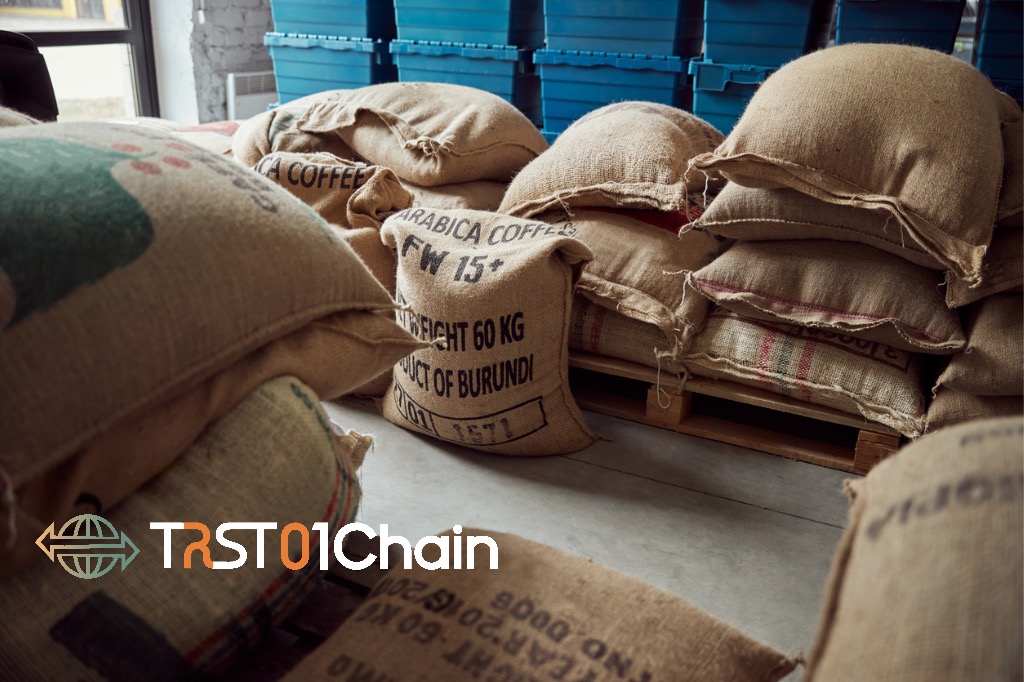
Compliance does not happen in a vacuum. Coffee moves on ships, and conflict keeps disrupting that trade; adding cost and volatility on top of the regulatory burden. The Ukraine war reshaped global logistics through Black Sea port closures, rerouted cargo and surging freight, fuel and insurance costs, while more recent tension around the Strait of Hormuz has pushed oil above $100 a barrel and lifted shipping costs further. Combined with falling Brazilian exports and reduced Colombian output, these pressures drove arabica and robusta prices to multi-week highs in early 2026, so exporters now absorb conflict-driven freight costs on top of EUDR compliance costs of $50–$100 per metric ton, squeezing margins from both sides at once.
Why Traceability Is the Common Thread
What ties the soluble coffee expansion and the war-driven disruption together is a single requirement: trustworthy, end-to-end traceability. Whether the challenge is proving that every bean in a soluble blend is deforestation-free, or demonstrating provenance when supply routes are rerouted and chains of custody are stretched, the answer lies in transparent, verifiable data that follows the product from farm plot to border.
This is precisely where technology earns its place. TRST01Chain, our full traceability stack, is built to help producers and exporters meet EUDR requirements, providing in-depth farm mapping, geolocation capture, real-time data tracking and management of compliance documentation. For the newly in-scope soluble segment, that means the ability to track coffee from the exact plot where it was grown, through the extraction facility, to the EU border, the digital product passport the regulation now effectively demands.
By making compliance accessible to both smallholders and large producers, the right technology stack turns a daunting obligation into a manageable, even advantageous, process; one that supports premium, deforestation-free branding rather than market exclusion.
TRST01Chain MeeS: Making Soluble Coffee Traceability Easy
Soluble coffee is rarely a single-origin product. To create a consistent, signature taste, manufacturers blend beans from multiple sources — often dozens of farms across several countries; into one unique blend. That is exactly what makes its traceability so demanding, and exactly where TRST01Chain MeeS does the heavy lifting. As an internal traceability solution purpose-built for soluble coffee, it makes the process easy taking care of the longer chain of custody, mass-balance blending and upstream geolocation end to end, so producers and manufacturers do not have to stitch together a patchwork of disconnected tools.
- Longer chain of custody — TRST01Chain captures and links every handoff from farm plot through the extraction facility to the EU border, preserving an unbroken, verifiable trail even for heavily processed soluble extracts.
- Mass-balance blending — Because a unique blend is built from beans of many origins, the platform tracks each component and ties it back to its compliant, deforestation-free source, so the integrity of the entire blend can be demonstrated, not just claimed.
- Upstream geolocation — The solution captures the exact plot-level geolocation of the beans behind every extract, pushing traceability all the way up the chain to satisfy EUDR’s farm-level requirements.
- Consolidation of GeoJSON data — Plot boundaries and coordinates from across a fragmented smallholder supply base are gathered, validated and consolidated into clean, submission-ready GeoJSON, removing one of the most error-prone steps in due diligence.
All of this is delivered in one easy, integrated workflow — a single one-stop solution rather than a maze of spreadsheets and standalone systems. The result is a ready-to-use digital product passport that follows the coffee from farm to border, exactly as the expanded regulation now demands.
The Road to December 2026
As the application date approaches, coffee-producing countries and their supply chains must adapt quickly. The expansion to soluble coffee widens the net; the conflict-driven cost environment raises the stakes. But the path forward is clear: map the supply base, capture geolocation data, build robust digital traceability, and engage suppliers now rather than at the deadline.
For coffee producers, exporters and everyone in the supply chain, staying informed and prepared is essential. TRST01 is ready to support the industry through this transition with solutions that strengthen both compliance and sustainability.
Connect With us
TRST01 helps coffee producers and exporters navigate the complexities of the EUDR —including the newly added soluble coffee scope with TRST01Chain, our full tech stack designed to streamline compliance and ensure transparency across the supply chain. Contact us for a demo or write to us for more on how we can help your business adapt to the evolving regulation.
Type your paragraph here



Recent Comments
Recent Posts
- Kisan Samrudhi: Where Healthy Soil Becomes Income June 11, 2026
- EUDR Coffee : Between the Cup and the Lip June 4, 2026
- Traceability as Infrastructure February 27, 2026
- Reimagining EPR in the Digital Age January 1, 2026
- EUDR FAQ Insights_4th iteration May 2, 2025
- Shaping a Greener, Smarter World December 27, 2024
- Sustainability Through Traceability December 9, 2024
- MoU with Rubber Board August 27, 2024
- Sustainability and TRST01 Technology Innovation August 12, 2024
- Driving Global Impact: Regulation, Technology, and Adoption July 14, 2024
- Blockchain Revolutionising Provenance Global Supply Chains July 11, 2024
- Supply Chain Innovation TRST01Chain June 18, 2024
- Blockchain for Sustainability June 14, 2024
- EUDR and India Rubber Export May 25, 2024
- Data Driven Sustainability April 28, 2024
- Paradigm Shift in ESG April 14, 2024
- ESG Beyond the Reports March 21, 2024
- New Frontier : Carbon Broader Adjustment Mechanism (CBAM) January 27, 2024
- EUDR Compliance in Indian Trade January 7, 2024
- The Indian Coffee Story : Brewing Harmony December 16, 2023
- The Rubber Story : Between Growth and Sustainability December 10, 2023
- The 4R Strategy : Roadmap to Sustainable Growth December 3, 2023
- Sustainable Indian Coffee: A EUDR Perspective November 10, 2023
- Climate Tech and SDGs: Unlocking Potential October 21, 2023
- ESG Scorecards : TRST01’s Vision October 11, 2023