The Second Harvest, Carbon Credit from Sugarcane Cultivation
11 June 2026
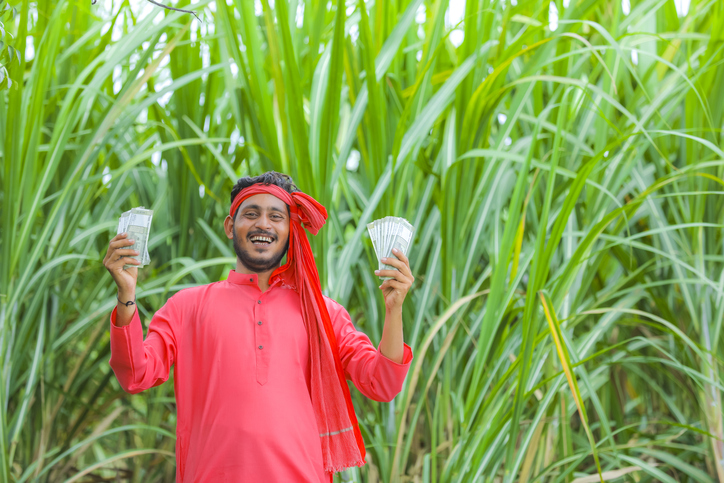
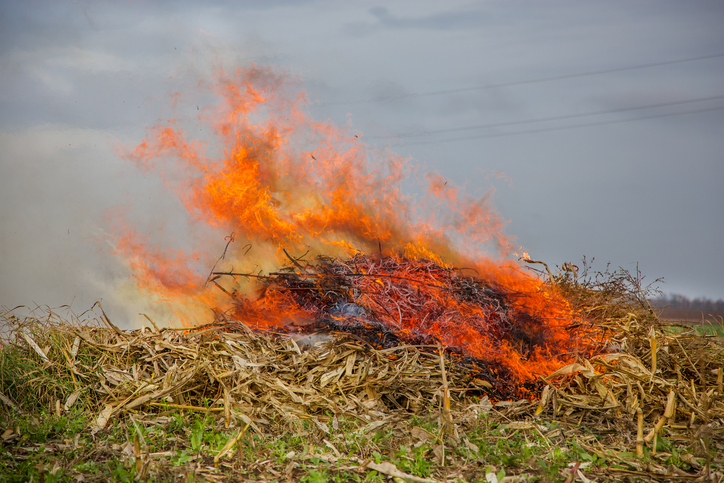
Drive through Muzaffarnagar, Shamli or Saharanpur in the months after harvest and you will often smell it before you see it: the sharp haze of burning cane trash drifting across the road. For generations, setting fire to the dry leaves left behind after the sugarcane harvest has been the quickest way to clear a field for the next crop. It is also one of the most wasteful — sending carbon, nutrients and money up in smoke, and fouling the winter air of India’s most productive sugar belt.
What if that same trash, and the soil beneath it, could instead become a second harvest — one that pays? That is the simple, powerful premise behind the Kisan Samrudhi Carbon Credit Yojana, a programme TRST01 is implementing on the ground with IIT Roorkee as technology partner and the backing of the Government of Uttar Pradesh. It is one of India’s first large-scale efforts to put carbon markets directly within reach of ordinary sugarcane farmers.
अब गन्ने के साथ मिट्टी से कमाई भी।
— किसान समृद्धि: सीधी कमाई, स्थानीय फायदा।
The sugar belt’s hidden opportunity
Western Uttar Pradesh grows more sugarcane than almost anywhere else in India. The Saharanpur division — Saharanpur, Muzaffarnagar and Shamli — is its dense, green, cane-covered core, home to hundreds of thousands of smallholder growers. That concentration is exactly what makes it such fertile ground for climate action: small, proven changes in how cane is grown, multiplied across lakhs of hectares, add up to a very large reduction in greenhouse-gas emissions and a very large gain in soil health.
The science is well established. When farmers move away from burning and intensive tillage toward regenerative practices, their soil begins to absorb and lock away carbon dioxide from the atmosphere. Each tonne of carbon dioxide stored in the soil can be certified as one carbon credit — a tradable unit that companies around the world buy to offset emissions they cannot yet eliminate. The opportunity has always been real; what has been missing is a way to measure it credibly and pay farmers fairly. That is the gap Kisan Samrudhi is built to close.
From burning to building : the practice shift
At the heart of the programme is a change of mindset — from treating cane trash as waste to treating it as an asset. Instead of being set alight, the dry leaves stripped at harvest are spread back across the field as a mulch blanket. The effect is quietly transformative. Trash mulching has been shown to steadily raise soil organic carbon over successive ratoon cycles, while burning depletes it. The blanket conserves soil moisture, suppresses weeds, moderates soil temperature, and recycles substantial quantities of nitrogen, phosphorus and potassium straight back into the ground — reducing the need for purchased fertiliser.
Trash management is the headline, but it travels in good company. Growers in the programme also adopt reduced tillage to keep carbon in the soil, balanced and timely fertiliser use to curb nitrous-oxide emissions, organic manure and bio-inputs to feed soil biology, and more efficient drip and furrow irrigation to cut both water use and the diesel and electricity burned to pump it. Better ratoon management rounds it out. Individually, each practice is modest; together, they lower emissions and input costs while lifting long-term yields — a rare case where the climate-smart choice is also the profitable one.
Proof you can trust
The hardest part of any farmer-facing carbon project has never been the farming — it has been the proof. Carbon markets demand rigorous, auditable evidence that emissions were genuinely reduced, and that single requirement has historically locked smallholders out. This is where the partnership becomes decisive.
TRST01’s digital Monitoring, Reporting and Verification (dMRV) platform is the backbone. It combines field-level data, remote sensing, AI-driven carbon intelligence and tamper-evident blockchain records to quantify exactly how much carbon each farm stores — turning messy, real-world farm activity into data that markets can trust. IIT Roorkee, the programme’s nodal academic partner, anchors that measurement in peer-reviewed science and aligns it with internationally recognised standards such as Verra’s Verified Carbon Standard (VCS) and the Gold Standard. Industry partners including ComplianceKart, ExcelESG, Proclaim and Satt Global round out the consortium, supporting measurement, compliance and access to buyers under a programme with roughly ₹100 crore of initial backing, launched for the Kharif season.
“Every tonne of carbon stored in the soil is measured, verified and monetized — this is science, policy and industry coordinating for large-scale climate action through agriculture.”
— Prof. A. S. Maurya, Nodal Officer, IIT Roorkee
Money in the farmer’s hands
What truly sets Kisan Samrudhi apart is where the money goes. Once credits are verified and sold, the proceeds flow directly into farmers’ bank accounts rather than being absorbed by a chain of intermediaries, depending on soil quality and the amount of carbon stored. For a smallholder navigating volatile cane prices, delayed mill payments and rising input costs, a transparent, recurring second income can make a real difference.
The on-ramp is deliberately simple. Participation is entirely voluntary and registration is free. At a digital-registration drive among cane growers in Nasirpur, TRST01 director Dr. Sushant Kumar Barik walked farmers through the scheme and its benefits, while chief technology officer Praveen demonstrated mobile-app onboarding, field-level data capture and data security — enrolling the first farmers on the spot. Awareness meetings have since spread across villages including Peeplheda, Budhina Kala, Dhindhawali, Muthra, Rohana Kala and Akbargarh in the Baghra and Charthawal blocks, with officers such as Deputy Director of Agriculture Pramod Sirohi and District Agriculture Officer Rahul Tevatia guiding farmers and answering their questions.
Beyond sugarcane
While cane is the centre of gravity in this belt, the same model extends naturally to the rest of the rotation. For paddy — a smaller share of local farming, but highly water-intensive and a significant source of methane — the programme promotes Direct Seeded Rice (DSR) and Alternate Wetting and Drying (AWD), which together sharply cut methane emissions while saving groundwater. The methodology is crop-smart but standard-agnostic: whatever the crop, the principle is the same — measure the real change, verify it independently, and reward the farmer for it.
Why it matters
Kisan Samrudhi sits at the intersection of three goals that rarely align so neatly: rural income, soil restoration and climate action. It puts new, measurable money in farmers’ hands. It rebuilds degraded soils that are a quiet crisis across much of India. It gives companies pursuing Net Zero access to high-integrity, transparently verified credits rooted in genuine, on-the-ground change. And in the sugar belt specifically, it turns one of the region’s most visible environmental problems — the smoke of burning cane trash — into a source of soil carbon, cleaner winter air, and farmer income all at once.
“This initiative gives farmers a meaningful stake in climate action by ensuring that their sustainable practices translate into real and measurable income.”
— Prof. K. K. Pant, Director, IIT Roorkee
If it scales as designed, Kisan Samrudhi could become a blueprint for how the Global South participates in carbon markets — not as a passive supplier of cheap offsets, but as a verified, fairly paid partner in the global effort to draw carbon back into the earth. For the cane farmers of western Uttar Pradesh, the message is quietly revolutionary: the soil beneath their feet has always fed the nation — now, with the right technology and the right partnership, it can sustain their livelihoods too.
Partner with us
TRST01 builds AI-native carbon intelligence that turns sustainability data into measurable climate action — from the Congo Basin to Uttar Pradesh. If you are a farmer-producer organisation, mill, corporate buyer or government partner who wants to bring transparent, high-integrity carbon programmes to your supply chain, we would love to talk.
Write to us at [email protected] or visit trst01.com
गन्ना भी, कार्बन भी — एक नाम, एक पहचान, एक लाभ।



Recent Comments
Recent Posts
- Kisan Samrudhi: Where Healthy Soil Becomes Income June 11, 2026
- EUDR Coffee : Between the Cup and the Lip June 4, 2026
- Traceability as Infrastructure February 27, 2026
- Reimagining EPR in the Digital Age January 1, 2026
- EUDR FAQ Insights_4th iteration May 2, 2025
- Shaping a Greener, Smarter World December 27, 2024
- Sustainability Through Traceability December 9, 2024
- MoU with Rubber Board August 27, 2024
- Sustainability and TRST01 Technology Innovation August 12, 2024
- Driving Global Impact: Regulation, Technology, and Adoption July 14, 2024
- Blockchain Revolutionising Provenance Global Supply Chains July 11, 2024
- Supply Chain Innovation TRST01Chain June 18, 2024
- Blockchain for Sustainability June 14, 2024
- EUDR and India Rubber Export May 25, 2024
- Data Driven Sustainability April 28, 2024
- Paradigm Shift in ESG April 14, 2024
- ESG Beyond the Reports March 21, 2024
- New Frontier : Carbon Broader Adjustment Mechanism (CBAM) January 27, 2024
- EUDR Compliance in Indian Trade January 7, 2024
- The Indian Coffee Story : Brewing Harmony December 16, 2023
- The Rubber Story : Between Growth and Sustainability December 10, 2023
- The 4R Strategy : Roadmap to Sustainable Growth December 3, 2023
- Sustainable Indian Coffee: A EUDR Perspective November 10, 2023
- Climate Tech and SDGs: Unlocking Potential October 21, 2023
- ESG Scorecards : TRST01’s Vision October 11, 2023