The Next Era of Agricultural Competitiveness
27th Feb 2026
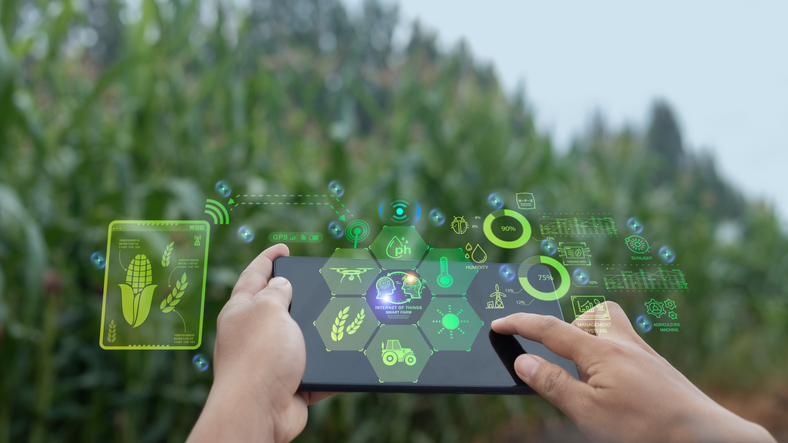
Agriculture is entering a new era—one defined not just by productivity, but by provability. Every product on a shelf or crossing a border carries a story: where it was grown, who nurtured it, how it was handled, whether it is GI or Organic certified, the practices followed, and whether its journey was ethical and sustainable. In the past, agricultural success was measured by higher yields, improved seeds and fertilisers, and efficient logistics. Today, the world demands something more: to know and trust the story behind every crop, from seed to fork. Over 30% of global agricultural trade will soon be subject to enhanced due diligence norms.
Governments now demand real due diligence, not just box-ticking. Buyers want proof of responsible origins. Financiers need visibility into climate and compliance risks. Consumers want food that’s truly sustainable.
The future of agriculture depends on trust and clear, reliable information that is accessible to all. It means being able to trace a product’s journey from seed to fork, including its GI or Organic status and the practices used. Achieving this requires robust digital infrastructure—open, inclusive, and designed as a public good. Treating traceability as Digital Public Infrastructure (DPI) makes transparency routine and benefits everyone in the supply chain. Notably, India’s more than 100 million smallholder farmers participate in highly fragmented supply chains.
Transparency Is Becoming Economic Infrastructure
Transparency was once a bonus for brands, a way to build trust and goodwill. Now it’s a necessity: without proof of your product’s story, you risk losing access to major markets.
Imagine a coffee farmer in Karnataka, a Kala Namak rice grower in UP, or a cocoa cooperative in Ghana. Their ability to sell internationally now depends on more than the quality of their harvest. They must show proof that their land was not deforested to grow crops; that the farmers working the land are who they say they are; that every step of production can be traced and verified. These aren’t just bureaucratic hurdles; they’re the new language of trust.
Furthermore, while deforestation is the immediate regulatory hurdle, true sustainability is about more than just meeting regulations; it is about protecting the people and places behind every crop. The ongoing EU-India Free Trade Agreement (FTA) negotiations present a major opportunity for Indian agriculture, but they also raise the bar: under the EU climate, environmental, sustainability, and labour rights frameworks, traceability is fundamental to meeting these standards. Future-ready infrastructure must track broader ecological metrics such as water stewardship, soil health, and Scope 3 carbon emissions, but must also be designed for human understanding and connection. As global import standards remain fragmented across Europe, the Americas, and Asia, this digital backbone should be built on globally recognised interoperability standards. This ensures that a farmer’s verified data in India or Ghana is not only instantly recognisable and trusted by a customs official or buyer anywhere in the world, but also accessible, meaningful, and empowering for the farmers themselves. By focusing on people as much as compliance, we prevent a bottleneck of competing international systems and build trust across the entire supply chain.
Across the world, agricultural exports increasingly depend on meeting transparency expectations like:
– Proof that land is farmed sustainably, not at the expense of precious forests, including adherence to Geographical Indication (GI) and Organic certification standards where applicable
– Verified identity, ensuring farmers are recognised and rewarded
– Production data pinned to real places on the map, open to honest review
– Documented journeys, showing where goods have been and how they were handled, from seed to fork, encompassing the full package of practices followed
– Clear evidence of environmental and social responsibility, not just promises
This is more than a paperwork upgrade. It’s about giving everyone, farmer, trader, buyer, consumer, confidence in the journey food takes. Without this level of openness, shipments get held up, rejected, or never make it to market. The stakes are real, and the impact is felt by people at every link in the chain.
In this new reality, transparency isn’t just a competitive edge; it’s the ground rules for being part of the global food community. It is incorporated into the very fabric of modern markets, shaping opportunities and inclusion for millions.
TRST01: Turning Compliance into National Capability
The urgency is no longer theoretical. Under the EU Deforestation Regulation (EUDR), commodities such as rubber and coffee entering the European Union must now be geo-located to the exact production plot, proven not to be linked to deforestation after December 31, 2020, and supported by full supply chain traceability. For India, where natural rubber and coffee production are concentrated in states like Kerala, the North East states and Karnataka, this creates an immediate structural challenge. Because the sector is dominated by smallholders, the lack of geo-verified land records, authenticated farmer identities, and batch-level traceability means shipments risk delay, rejection, or exclusion from lucrative EU markets. Compliance is no longer a simple paperwork exercise; it is a strict market-entry requirement.
This is where TRST01 moves from concept to demonstrated capability, showing that population-scale traceability is not just possible but already transforming lives. In Southeast Asia, TRST01 already supports more than 250,000 smallholders, each with their own story, family, and livelihood, while in India, its coffee implementation in Karnataka covers over 125,000 acres, helping thousands of farmers map their land and document every step of their work. The Bharat Sustainable Natural Rubber (BSNR) initiative, to be launched by the Rubber Board of India and powered by TRST01, will enable smallholders, many of whom have never had access to such tools, to generate EUDR-compliant documentation at no cost.
By institutionalising traceability as Infrastructure, rubber and coffee become more than commodities; they are proof that when transparency is embedded as a public good, regulatory pressure can be transformed into long-term national competitive advantage. Recognising the critical need for scalable, public-centric solutions, the World Bank commissioned TRST01 to develop the blueprint for India’s first Digital Public Infrastructure (DPI) framework for agricultural traceability. This makes traceability a national asset, not just a service. The World Bank’s blueprint sets a new standard for building digital agriculture that includes everyone, so smallholders aren’t left behind as India joins the global digital economy.

Traceability Must Move From Projects to Public Infrastructure
Historically, traceability in agriculture meant a patchwork of projects, each focused on one crop, buyer, or region. For farmers, this often meant extra paperwork and new systems to navigate each season, leading to frustration and fatigue.
As agriculture becomes more connected, these fragmented efforts leave too many people behind and create gaps in trust. We now need public digital infrastructure that works for everyone.
Digital Public Infrastructure (DPI), as defined by the G20, refers to “digital solutions that enable basic functions essential for public and private service delivery, such as identification, payments, and data exchange, through open standards and protocols, enabling large-scale inclusion, innovation, and competition.” (G20 2023)
The G20 Digital Economy Ministers further highlight that DPI should be built on secure and resilient digital systems, respect for privacy and protection of personal data, and interoperability by design. DPI is also recognised as a driver for affordable and inclusive access to digital services, and its development should be guided by multi-stakeholder collaboration to ensure innovation and that no one is left behind.
DPI lets all farmers, big or small, be recognised and included. It is open, fair, and designed to keep pace with tomorrow’s food system.
Bridging the Digital Divide and the Economics of Inclusion
Building this infrastructure means designing digital solutions that are simple, accessible, and tailored for real farmers; even in rural areas with limited connectivity. Tools must be easy to use and available in local languages, with support from trusted community members. The costs of transparency should be shared fairly so smallholders are supported, not burdened.
Making Traceability Work for Everyone
Traceability must function as a national-scale digital infrastructure. This means moving beyond isolated projects to a system designed for inclusion, trust, and transparency at every level. It should be built on Five Plus One essential layers, each providing a critical foundation for a resilient, people-centred agricultural future. To make this framework memorable and easy to recall, think of each layer with a simple keyword: ID (Identity), Events, Pipes (Interoperability), Consent, Apps (Applications), plus AI as the multiplier.
1. Identity & Registry Layer
At the foundation lies the verification of farmer identities, mapping of land parcels, institutional registries, and geo-coordinates. Trusted identities are essential; without them, data integrity cannot be maintained. Ultimately, these systems are people-centric: they ensure every individual is recognised, every story is counted, and technology is designed to reinforce the vital human relationships at the heart of agriculture.
2. Event & Traceability Layer
Standardised Key Tracking Eventscovering moments like planting, harvesting, aggregation, processing, and dispatch, establish a unified lifecycle record for all commodities. By capturing every significant step in a crop’s journey, this framework brings clarity, builds trust among all stakeholders, and enables farmers, buyers, and regulators to clearly understand and verify each stage from field to market.
3. Interoperability Layer
For digital agriculture to truly serve everyone, APIs and data standards must connect people,not just systems. Secure, transparent information flow creates trust and collaboration across the value chain, ensuring no one is left behind. Common protocols and open standards break down barriers and build resilient relationships. With true interoperability, everyone can participate, adapt, and innovate,keeping digital agriculture rooted in people.
4. Consent and data governance
Consent and data governance are foundational to building trust in digital agriculture. This means implementing mechanisms such as a DEPA consent architecture, role-based access controls, audit logs, and clear data policies, so that every farmer, trader, and stakeholder knows who can access their information and for what purpose. These safeguards ensure that data is shared responsibly, privacy is respected, and everyone can participate with confidence. Beyond mere privacy, this layer must champion data sovereignty. Farmers should not just be passive subjects of data collection; they must be recognised as the rightful owners of their agricultural data. When farmers adopt regenerative practices that yield valuable ecological data (such as carbon sequestration metrics), the infrastructure should enable them to securely share and actively monetise this data, turning compliance into a new revenue stream.
5. Application & Ecosystem Layer
When traceability becomes an integrated part of infrastructure, it unlocks a dynamic ecosystem of applications that reshape how agriculture is managed and how markets function. Governments benefit from real-time production visibility, targeted deforestation monitoring, and streamlined climate and compliance reporting. For markets, traceability supports transparent procurement, risk-adjusted pricing, and improved access to finance. These capabilities enable a shift from reactive to proactive oversight and foster informed, data-driven decisions. Importantly, this system must also support fair grievance redressal—so if mistakes or technical errors occur, farmers have simple, transparent ways to set the record straight. Trust grows when systems are designed to listen and correct, not just enforce.
6. AI as an Amplifier, Not a Substitute
Artificial intelligence can help agriculture by detecting risks, predicting yields, and modelling climate impacts. But its value depends on reliable data. Without structured traceability, AI may cause confusion,instead of clarity. With strong digital infrastructure, AI builds trust and helps everyone make better, more transparent decisions.
Population-Based Agriculture Requires Population-Scale Solutions
In countries across Asia and Africa, agriculture is dominated by smallholders. When millions of farmers participate in export supply chains, isolated pilots cannot solve systemic challenges.
Population-based agriculture demands:
- Standardised digital identity across farmer networks
- Harmonised event capture frameworks
- Commodity-agnostic architecture with configurable modules
- Scalable governance oversight
- Real-time risk dashboards at the state and national levels
The logic is simple: One cannot manage a million farmers with a thousand spreadsheets.
Just as digital payments required population-scale identity systems, agricultural traceability requires population-scale digital registries and event standards.
The future lies in ecosystem architecture, not fragmented applications. By focusing on interoperable platforms, shared data standards, and open governance, we can ensure that every participant in the agricultural value chain, from the smallest smallholder to the largest exporter, can connect, collaborate, and benefit. This approach breaks down silos and empowers innovation, enabling solutions to scale nationally and internationally while supporting both efficiency and inclusion.
Physical–Digital Convergence: The New Backbone of Trust
Agriculture remains a fundamentally physical process: crops grow in soil, are harvested by people, and move across vast geographies. Yet today’s markets are digital, demanding not just products but proof and trust at every step.
The bridge between the physical and digital is built through physical–digital convergence, where every stage of a product’s journey is captured, verified, and recorded. Farm boundaries are confirmed via satellite imagery, production events are logged digitally at the point of origin, and as commodities move through processors or change hands, each batch’s transformation,its change of state, is digitally documented. Logistics movements are time-stamped, and compliance risk is assessed in real time, creating a living record for everyone involved.
A critical part of this is the chain of custody, which helps us track a product’s journey as it changes hands from the farmer who grows it to the processor who prepares it to the exporter who takes it to new markets. Blockchain technology makes this process more human and transparent. It provides a secure, tamper-proof record of each step, so everyone—from smallholder farmers to global buyers—can trust that the product’s story is true and that no detail is lost or altered along the way. This builds real confidence across the entire food system, connecting people through trust rather than just data.
When physical activities are mirrored digitally, and every change of state and handover is secured using blockchain, supply chains develop memory. That memory creates true accountability, and accountability builds the trust that modern agricultural markets need to thrive.
From Commodity Power to Credibility Power
Nations have historically competed on volume. The next phase of agricultural competitiveness will be defined by credibility.
Countries that institutionalise transparency will:
- Protect smallholders from market exclusion
- Attract sustainability-linked finance
- Reduce export friction
- Strengthen sovereign trade positioning
- Comply seamlessly with global due diligence norms
Those who delay risk structural disadvantage.
In a situation where regulatory regimes are tightening, credibility is currency.
Redefining Agricultural Modernisation
Modernisation in agriculture is no longer just about machines; it’s about proving where food comes from and building trust through real-time data and transparency. Systems must enable everyone, farmers, buyers, and consumers, to trust the information they see. These human-centred foundations will make agriculture more resilient and fair in the future.
Conclusion: Building the Trust Layer of Global Food Systems
Agriculture is about more than food. It supports communities and livelihoods. In today’s world, trust is essential for open markets and new opportunities. The future belongs to food systems that embrace population-scale digital solutions. With transparency and traceability built into every step, agriculture delivers not just crops, but lasting confidence for everyone involved. The next era will be defined by how openly and credibly we grow our food. Nations that treat traceability as infrastructure will define the rules of agricultural trade. Those who treat it as a project will adapt to rules written by others.



Recent Comments
No comments to show.
Recent Posts
- Traceability as Infrastructure February 27, 2026
- Reimagining EPR in the Digital Age January 1, 2026
- EUDR FAQ Insights_4th iteration May 2, 2025
- Shaping a Greener, Smarter World December 27, 2024
- Sustainability Through Traceability December 9, 2024
- MoU with Rubber Board August 27, 2024
- Sustainability and TRST01 Technology Innovation August 12, 2024
- Driving Global Impact: Regulation, Technology, and Adoption July 14, 2024
- Blockchain Revolutionising Provenance Global Supply Chains July 11, 2024
- Supply Chain Innovation TRST01Chain June 18, 2024
- Blockchain for Sustainability June 14, 2024
- EUDR Coffee : Between the Cup and the Lip June 9, 2024
- EUDR and India Rubber Export May 25, 2024
- Data Driven Sustainability April 28, 2024
- Paradigm Shift in ESG April 14, 2024
- ESG Beyond the Reports March 21, 2024
- The Kenko Eggs A Case Study February 18, 2024
- New Frontier : Carbon Broader Adjustment Mechanism (CBAM) January 27, 2024
- EUDR Compliance in Indian Trade January 7, 2024
- The Indian Coffee Story : Brewing Harmony December 16, 2023
- The Rubber Story : Between Growth and Sustainability December 10, 2023
- The 4R Strategy : Roadmap to Sustainable Growth December 3, 2023
- Sustainable Indian Coffee: A EUDR Perspective November 10, 2023
- Climate Tech and SDGs: Unlocking Potential October 21, 2023
- ESG Scorecards : TRST01’s Vision October 11, 2023