EPRShield by TRST01
1st Jan 2026
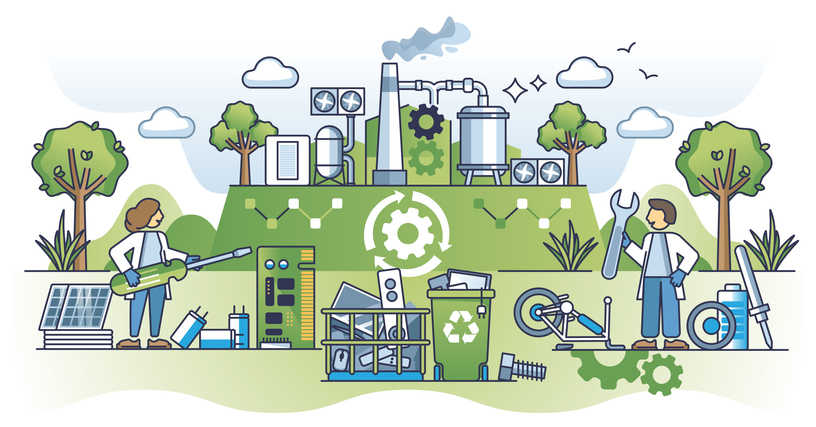
Extended Producer Responsibility (EPR) is about making companies take responsibility for their products even after they’re discarded. Instead of governments handling all waste, EPR requires producers to collect, recycle, and safely dispose of the waste from what they sell. But as EPR rules cover more areas, older methods aren’t keeping up, reports get lost, tracking is tough, and some recycling claims can’t be trusted. This makes it hard for EPR to achieve its goal.
EPRShield by TRST01 solves these issues by making EPR digital and easy to track. Now, everyone can see real results, not just paperwork. How EPR Has Changed and Why It Matters. EPR started with a simple idea: to internalise the environmental cost of products by making producers accountable for their end-of-life impact.
But in reality, EPR has hit a few snags:
- Too much paperwork
- Everyone works in silos
- It’s hard to see where waste really goes
- People rely on certificates instead of real proof
As the rules get tougher, these problems create risks for businesses, regulators, and the environment.

Extended Producer Responsibility (EPR) is about making companies take responsibility for their products even after they’re discarded. Instead of governments handling all waste, EPR requires producers to collect, recycle, and safely dispose of the waste from what they sell. But as EPR rules cover more areas, older methods aren’t keeping up, reports get lost, tracking is tough, and some recycling claims can’t be trusted. This makes it hard for EPR to achieve its goal.
EPRShield by TRST01 solves these issues by making EPR digital and easy to track. Now, everyone can see real results, not just paperwork. How EPR Has Changed and Why It Matters. EPR started with a simple idea: to internalise the environmental cost of products by making producers accountable for their end-of-life impact.
But in reality, EPR has hit a few snags:
- Too much paperwork
- Everyone works in silos
- It’s hard to see where waste really goes
- People rely on certificates instead of real proof
As the rules get tougher, these problems create risks for businesses, regulators, and the environment.

CPCB India: Guidance and Regulatory Evolution
In India, the evolution of EPR has been significantly shaped by guidance issued by the Central Pollution Control Board (CPCB) under the Environment (Protection) Act and the associated Waste Management Rules. (Guidelines on Implementation of E-Waste (Management) Rules, 2016, 2016)
Over the years, CPCB’s EPR framework has progressed through distinct phases:
- Initial Phase – Policy & Registration Focus Early EPR guidelines emphasised producer registration, annual returns, and target declarations, with compliance largely driven by self-reported data.
- Expansion Phase – Target-Based Compliance CPCB progressively introduced higher recycling and recovery targets across plastics, e-waste, batteries, and tyres, shifting EPR from intent to a measurable obligation. (India’s 2025 EPR Guidelines Explained for PIBOs and Brands, 2025)
- Digitalisation Phase – Centralised Portals The launch of CPCB-managed online EPR portals marked a move toward digitisation, standardised reporting formats, and improved regulatory oversight.
- Outcome-Oriented Phase – Verified Fulfilment Recent guidance places strong emphasis on traceability, recycler validation, and auditable EPR credit generation, signalling a clear regulatory shift away from paper certificates toward evidence-backed compliance.
This evolution reflects CPCB’s recognition that EPR cannot succeed without digital systems capable of tracking real waste flows and recycling outcomes. The regulator’s increasing focus on data integrity, cross-verification, and transparency underscores the need for platforms that can operationalise EPR at scale.
Implication for EPR Implementation
CPCB’s evolving guidance makes it clear that the future of EPR in India lies in:
- Digitally verifiable compliance
- End-to-end traceability of waste
- Reduced dependence on manual declarations
- Strong alignment between reported data and physical recycling activity
As India’s EPR regime matures, systems that translate regulatory intent into operational reality will be critical to ensuring that EPR delivers genuine environmental impact rather than procedural compliance.
Why EPR Needs a Digital Backbone
Modern EPR is no longer just about meeting numeric targets; it is about proof
- Proof that waste was actually collected
- Proof that recycling genuinely occurred
- Proof that credits are not duplicated or inflated
Without end-to-end traceability and trusted data, EPR risks becoming a reporting exercise rather than a sustainability instrument. This is where digital EPR infrastructure becomes essential.
Introducing EPRShield: A Purpose- Built Platform for EPR
EPRShield is a digital EPR compliance and traceability platform designed to manage the entire EPR lifecycle; from obligation calculation to verified fulfilment and regulatory reporting.
Unlike conventional compliance tools, EPRShield is built around a single principle: Every EPR claim must be traceable to a real waste transaction.
Core Pillars of EPRShield
1. End-to-End Waste Traceability
EPRShield digitally tracks waste across the full value chain: collection → aggregation → transportation → processing → recycling or disposal.
Each handover is recorded with time-stamped, location-linked data, creating a continuous chain of custody. This eliminates blind spots that often exist between producers and recyclers in traditional EPR systems.
2. Verified EPR Fulfilment
Rather than relying solely on certificates, EPRShield links EPR fulfilment directly to measured recycling activity. Credits are generated only when verified waste processing events occur, ensuring alignment between reported compliance and physical outcomes.
This dramatically reduces the risk of:
- Duplicate credit usage
- Over-reporting of recycling volumes
- Non-existent or unverifiable recycling claims
3. Tamper-Resistant Compliance Records
EPRShield maintains immutable digital records for all EPR transactions. These records are audit-ready by design, enabling regulators to verify compliance without extensive manual reconciliation.
For producers, this provides long-term compliance certainty. For regulators, it delivers trust and enforcement confidence.
4. Automated Reporting and Regulatory Alignment
EPR obligations, targets, and fulfilment data are automatically consolidated into regulator-aligned reports. This reduces manual effort, minimises errors, and ensures consistency across filings.
Producers can move from reactive, last-minute reporting to continuous compliance monitoring.
5. Multi-Stakeholder EPR Ecosystem
EPRShield connects all actors within the EPR ecosystem—producers, PROs, recyclers, aggregators, and auditors—on a single digital platform. Shared visibility improves coordination, accountability, and system-wide efficiency.
From Compliance to Accountability
Traditional EPR models often focus on what was declared. EPRShield focuses on what actually happened.
By anchoring compliance in traceable data, EPRShield strengthens:
- Regulatory integrity through transparent, auditable evidence
- Corporate governance by embedding EPR into operational workflows
- Environmental outcomes by ensuring real waste recovery
This shift from declarative to evidence-based EPR marks a fundamental evolution in how producer responsibility is enforced.
EPR as a Foundation for the Circular Economy
Digitally enabled EPR systems, such as EPRShield, play a critical role in advancing the circular economy. Reliable EPR data helps:
- Improve recycling infrastructure planning
- Enhance the quality and consistency of recycled materials
- Support policy decisions with real-world evidence
- Align corporate sustainability strategies with measurable impact
By closing the loop between production and recovery, EPRShield ensures that EPR fulfils its original promise, keeping materials in circulation and waste out of the environment.
Conclusion: The Future of EPR is Digital
As environmental regulations shift toward measurable outcomes, EPR can no longer rely on trust-based reporting and fragmented systems. Robust digital infrastructure is now essential to enable real-time compliance, transparency, traceability, and accountability at scale, while also improving resource efficiency and accelerating circular-economy outcomes.
EPRShield by TRST01 delivers this next generation of EPR: continuous compliance, verifiable data, and measurable environmental impact.
Connect with us: journey@trst01.com





Recent Comments
Recent Posts
- Traceability as Infrastructure February 27, 2026
- Reimagining EPR in the Digital Age January 1, 2026
- EUDR FAQ Insights_4th iteration May 2, 2025
- Shaping a Greener, Smarter World December 27, 2024
- Sustainability Through Traceability December 9, 2024
- MoU with Rubber Board August 27, 2024
- Sustainability and TRST01 Technology Innovation August 12, 2024
- Driving Global Impact: Regulation, Technology, and Adoption July 14, 2024
- Blockchain Revolutionising Provenance Global Supply Chains July 11, 2024
- Supply Chain Innovation TRST01Chain June 18, 2024
- Blockchain for Sustainability June 14, 2024
- EUDR Coffee : Between the Cup and the Lip June 9, 2024
- EUDR and India Rubber Export May 25, 2024
- Data Driven Sustainability April 28, 2024
- Paradigm Shift in ESG April 14, 2024
- ESG Beyond the Reports March 21, 2024
- The Kenko Eggs A Case Study February 18, 2024
- New Frontier : Carbon Broader Adjustment Mechanism (CBAM) January 27, 2024
- EUDR Compliance in Indian Trade January 7, 2024
- The Indian Coffee Story : Brewing Harmony December 16, 2023
- The Rubber Story : Between Growth and Sustainability December 10, 2023
- The 4R Strategy : Roadmap to Sustainable Growth December 3, 2023
- Sustainable Indian Coffee: A EUDR Perspective November 10, 2023
- Climate Tech and SDGs: Unlocking Potential October 21, 2023
- ESG Scorecards : TRST01’s Vision October 11, 2023