Traceability You Can Trust
How TRST01 Delivers Deforestation-Free Supply Chains
Supply chain traceability is no longer a nice-to-have. It is the price of entry to the world's most valuable markets.
The EU Deforestation Regulation (EUDR) requires that rubber, coffee, soy, cocoa, palm oil, cattle and wood entering the EU be deforestation-free, legally produced and traceable to the exact plot of land where they were grown. Large operators must comply from 30 December 2026. Buyers in the US, UK and Japan are asking the same questions through their own sourcing rules and ESG commitments.
For exporters, cooperatives and processors, this creates one hard question: can you prove where every kilogram came from, and that no forest was cleared to grow it?
Most traceability tools answer only part of that question. Some collect farmer data but cannot verify it. Others buy satellite imagery but cannot link it to a specific batch. TRST01 was built to answer the whole question, from the farm boundary to the export container, on one platform.
What is TRST01Chain?
TRST01Chain is TRST01's end-to-end supply chain traceability platform. It brings farm mapping, deforestation checks, batch tracking and compliance reporting into one system, so exporters do not need to stitch together separate tools.
TRST01Chain is built around four core capabilities:
- Farmer and plot registry: every farmer, plot polygon and land document is captured once and reused across seasons, buyers and certifications.
- Batch-to-farm tracking: each purchase, transfer and processing step is recorded, so any lot can be traced back to its source plots in a few clicks.
- Tamper-evident records: key events are time-stamped and anchored on a secure ledger, giving buyers and auditors confidence that data has not been changed after the fact.
- Compliance-ready outputs: geolocation files, risk results and shipment reports are prepared in the formats buyers need for EUDR due diligence statements.
TRST01Chain also powers TRST01's work on public traceability infrastructure with governments and development institutions. The same platform that serves a single cooperative can scale to state-wide and national agri-food traceability programmes. The sections below explain what makes it different.
Own drones and multi-layer mapping: ground truth, not guesswork
TRST01 operates its own drone fleet, which makes it one of the few traceability providers that can verify farm boundaries first-hand rather than relying only on third-party data.
Why does this matter? EUDR requires geolocation for every plot, and polygon boundaries for plots larger than four hectares. A GPS point typed into a phone by a field agent can be off by tens of metres. A boundary drawn from blurry imagery can include a patch of forest that was never part of the farm. Either error can put a whole shipment at risk.
TRST01 combines several mapping methods so each one checks the others:
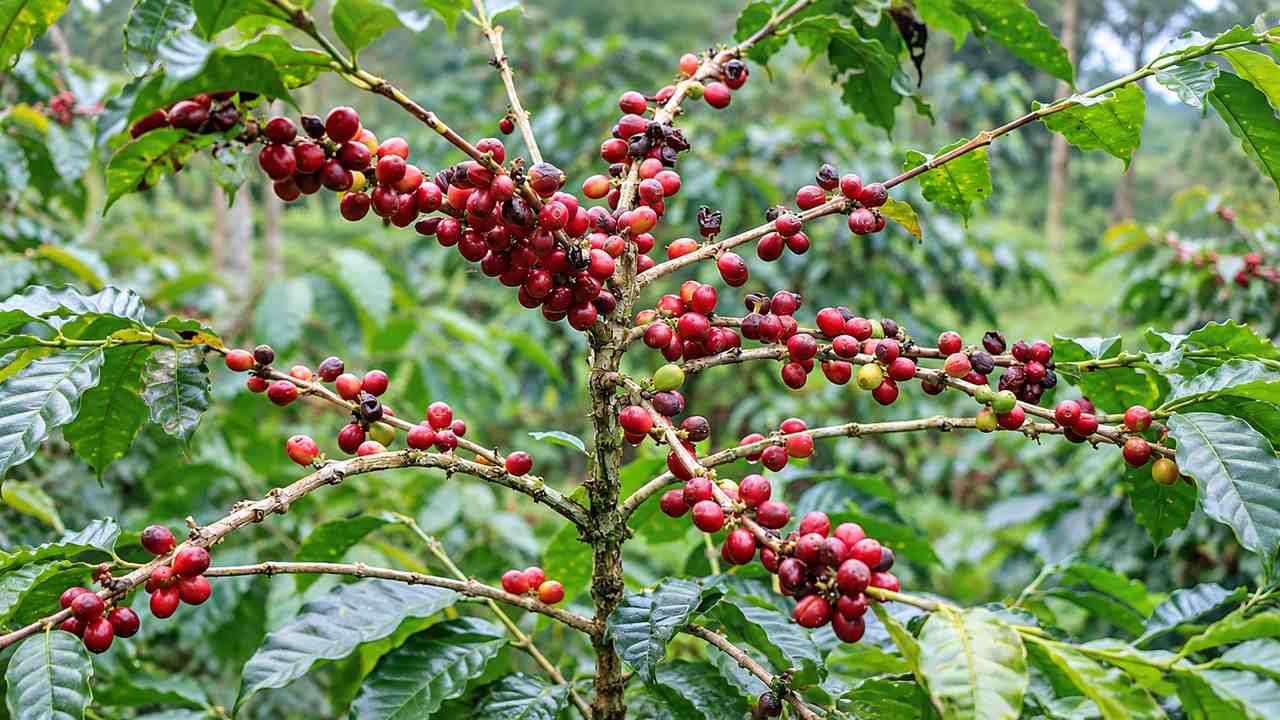
- Drone mapping: high-resolution aerial surveys capture precise farm boundaries, tree cover and land use, especially for smallholder plots under shade or tree canopy, such as rubber and coffee.
- Satellite imagery: time-series satellite data shows how land cover has changed over the years, including before and after the EUDR cut-off date of 31 December 2020.
- Mobile field mapping: trained field teams walk farm boundaries with GPS-enabled apps, capturing polygons and farmer details even in areas with poor connectivity.
- Document and land-record checks: plot data is matched against land titles and registration records where they exist, supporting the legality requirement.
The result is a geolocation record that buyers and auditors can trust because it has been checked from the air, from space and on the ground.
Proprietary deforestation analysis: how TRST01 proves a farm is deforestation-free
TRST01 runs its own proprietary deforestation analysis, so every mapped plot gets a clear, evidence-backed risk result instead of a generic country score.
The analysis overlays each farm polygon on historical and current land-cover data and checks for forest loss after the 31 December 2020 cut-off. It distinguishes natural forest from plantation tree cover, which matters greatly for tree crops like rubber and shade-grown coffee, where generic global forest maps often raise false alarms.
Each plot receives one of three outcomes:
- Low risk: no forest loss detected after the cut-off; ready for the due diligence statement.
- Needs review: a possible change is detected; the plot is flagged for drone verification or a field visit.
- High risk: clear forest loss detected; the plot is excluded from compliant supply until the issue is resolved.
Because the analysis is built in-house, TRST01 can tune it to local crops, landscapes and seasons across Asia and Africa. Exporters avoid two costly mistakes: shipping product from a non-compliant plot, and wrongly rejecting a compliant smallholder because of a poor-quality global map.
A native AI platform, not an add-on
TRST01 is an AI-native traceability platform: artificial intelligence is built into how data is captured, checked and reported, not bolted on later.
In practice, this means:
- Automated data validation: AI flags overlapping polygons, duplicate farmer records, impossible yields and missing documents before they reach a buyer.
- Image intelligence: machine-learning models read drone and satellite imagery to detect land-cover change, tree cover and farm boundaries at scale.
- Volume reconciliation: the platform checks that the quantity sold by each farm matches what its land can realistically produce, a key signal for spotting mixing or laundering of non-compliant product.
- Report generation: due diligence statements, buyer reports and audit packs are prepared from verified data in minutes, not weeks.
For compliance teams, this means less manual checking and fewer surprises. For management, it means a live view of risk across thousands of farms and suppliers.
Complete supply chain visibility, from farm to export
TRST01Chain, TRST01's traceability platform, links every batch to the farms it came from, across every step of the supply chain.
Many systems stop at the first collection point. Once produce is pooled at a cooperative, aggregator or processing unit, the link to individual farms is lost. TRST01 keeps that link alive through each stage:
- Farm: farmer profile, mapped plot, deforestation result and harvest record.
- Collection and aggregation: purchase receipts tied to specific farmers and plots.
- Processing: inputs and outputs tracked at the factory, so a sheet of rubber, a bag of green coffee or a lot of soybeans carries its origin forward.
- Export: each shipment is linked to its source plots, ready for the buyer's due diligence statement.
Every event is time-stamped and recorded on a tamper-evident ledger, so the record cannot be quietly edited after the fact. Buyers, certifiers and regulators can be given secure access to see exactly what they need, and nothing more.
Trusted by 200+ clients across Southeast Asia, Africa and India
More than 200 clients rely on TRST01 to trace rubber, coffee and soy across Southeast Asia, Africa and India.

Clients include exporters, cooperatives, farmer producer organisations, processors and government-linked programmes. They operate in very different conditions, from smallholder rubber in Southeast Asia and India to coffee cooperatives in Africa. The common thread is confidence: when a buyer asks for proof, they can produce it.
TRST01 also works with government bodies and development institutions on public traceability infrastructure, which keeps the platform aligned with how regulators actually check compliance.
Why choose TRST01 for EUDR compliance?
TRST01 is the traceability partner that owns its verification chain end to end. In short:
- Own drones for first-hand, high-resolution farm mapping
- Multi-layer mapping across drone, satellite, field and land records
- Proprietary deforestation analysis tuned for tree crops and local landscapes
- Native AI platform for validation, imagery analysis and reporting
- Complete supply chain visibility from farm plot to export shipment, on TRST01Chain
- 200+ clients across Southeast Asia, Africa and India
Frequently asked questions
What is supply chain traceability? It is the ability to track a product back through every stage of its journey to the farm where it was grown, with verified data at each step.
Does TRST01 help with EUDR due diligence statements? Yes. TRST01 provides plot geolocation, deforestation risk results and batch-to-farm links, the core evidence an operator needs for its EUDR due diligence statement.
Why use drones when satellite data exists? Satellites show change over time; drones show fine detail on the ground today. Smallholder plots under tree canopy are often too small or too covered for satellite imagery alone.
Which commodities does TRST01 trace? TRST01 is widely used for rubber, coffee and soy, and supports other EUDR commodities such as cocoa, palm oil and wood.
Can smallholder farmers be included? Yes. Field mapping works offline, and the platform is designed for large networks of smallholders organised through cooperatives and producer groups.
Prove your supply chain with confidence
The EUDR deadline is close, and buyers are already asking for proof. Talk to TRST01 to see how drone-verified mapping, deforestation analysis and AI-driven traceability can protect your market access.
Explore TRST01 solutions: EUDR Compliance · EUDR Hub for Operators & Importers · EUDR Polygon Validator · TRST01Chain for Upstream Processors · TRST01Chain for Manufacturers & Exporters · EUDR Knowledge Hub
Visit trst01.com or book a demo.