Building the Rails Before the Apps
How TRST01 Consortium Designed OATS; a sovereign grade Agri traceability DPI
%20(3).png)
.png)
The Challenge: Traceability Has Solutions. It Doesn't Have Infrastructure.
Digital traceability is not a new idea. Traceability solutions have existed for more than two decades, and over a hundred applications already compete in the market. The problem the World Bank set out to solve was not a shortage of solutions. It was the absence of shared infrastructure underneath them, the rails that would let those hundred applications actually interoperate.
Three structural gaps kept showing up. Regulations were arriving faster than the infrastructure needed to comply with them. Proprietary, closed traceability systems were priced out of reach for smallholder farmers and cooperatives. And even within India's own export ecosystem, systems that were supposed to talk to each other, including the country's own agricultural export promotion body, often did not.
- A single consignment, for example a mango grown in Maharashtra, can pass through as many as seven different digital systems before it reaches a shop in Europe, none of which share data with each other.
- Proprietary, per-buyer traceability systems are expensive to integrate, and every new buyer demand triggers another costly integration project.
- Smallholder farmers, who grow most of the world's food, are routinely priced out of premium export markets because they cannot afford the compliance systems those markets require.
- Regulatory pressure is converging fast: the EU Deforestation Regulation, the US Food Safety Modernization Act's Section 204, and India's own Digital Personal Data Protection Act all now demand that agricultural goods travel with verifiable evidence.
The World Bank's own published estimates give the stakes a number: unsafe food costs low- and middle-income countries an estimated $110 billion a year, and scaled foodborne-disease surveillance could prevent up to 19 million illnesses annually. Left unaddressed, fragmentation does not just cost money. It pushes smallholders out of the very markets that could raise their incomes.
Why Traceability Needed to Become Infrastructure, Not Another App
India has already shown what happens when a hard coordination problem is solved as public infrastructure rather than as a product. Aadhaar gave a billion people a verifiable identity. UPI now processes more real-time payments than the rest of the world combined. The pattern is consistent: open protocols and modular components at the base, with private companies competing on what they build on top, not on who controls the base layer itself.
Traceability fits the same pattern. Recording what happens to a crop from sowing to shipment should not be a competitive advantage locked inside one company's software. It is basic infrastructure, and companies should compete on what they do with that record: building brands, offering financing, improving logistics, not on who owns the record itself.
The Turning Point: The World Bank Commissions an Open Blueprint
The Open AgriTrace Stack was commissioned by the World Bank, in partnership with the Department of Agriculture, Government of Maharashtra, explicitly as a global public good rather than a piece of software for sale. It was financed through a grant from the Korea-World Bank Partnership Facility (KWPF), administered under the World Bank-supported State of Maharashtra Agribusiness and Rural Transformation (SMART) Project.
A consortium led by TRST01 (Tryambhu Tech Solutions Private Limited) was engaged to author the Blueprint, alongside ICAR-CIRCOT (the Central Institute for Research on Cotton Technology), GS1 India and Tetra Information Services Private Limited. On the World Bank side, the task team was led by Mr Adarsh Kumar, under the strategic guidance of Practice Manager Ms Gayatri Acharya, with technical direction on architecture and standards mapping from Senior Consultant Mr Vikas Kanungo. TRST01's Founder and CEO, Prabir Mishra, led the consortium's stewardship of the Blueprint's technical rigour and editorial coherence.
- Built as a global public good from the outset, not a proprietary product to be licensed back to the governments that commissioned it.
- Grounded in real diagnostic research, including a nine-crop diagnostic study conducted in Maharashtra as part of the Blueprint's preparation.
- Subjected to independent, named peer review before publication, rather than released and reviewed after the fact.
The Solution: The Open AgriTrace Stack (OATS)
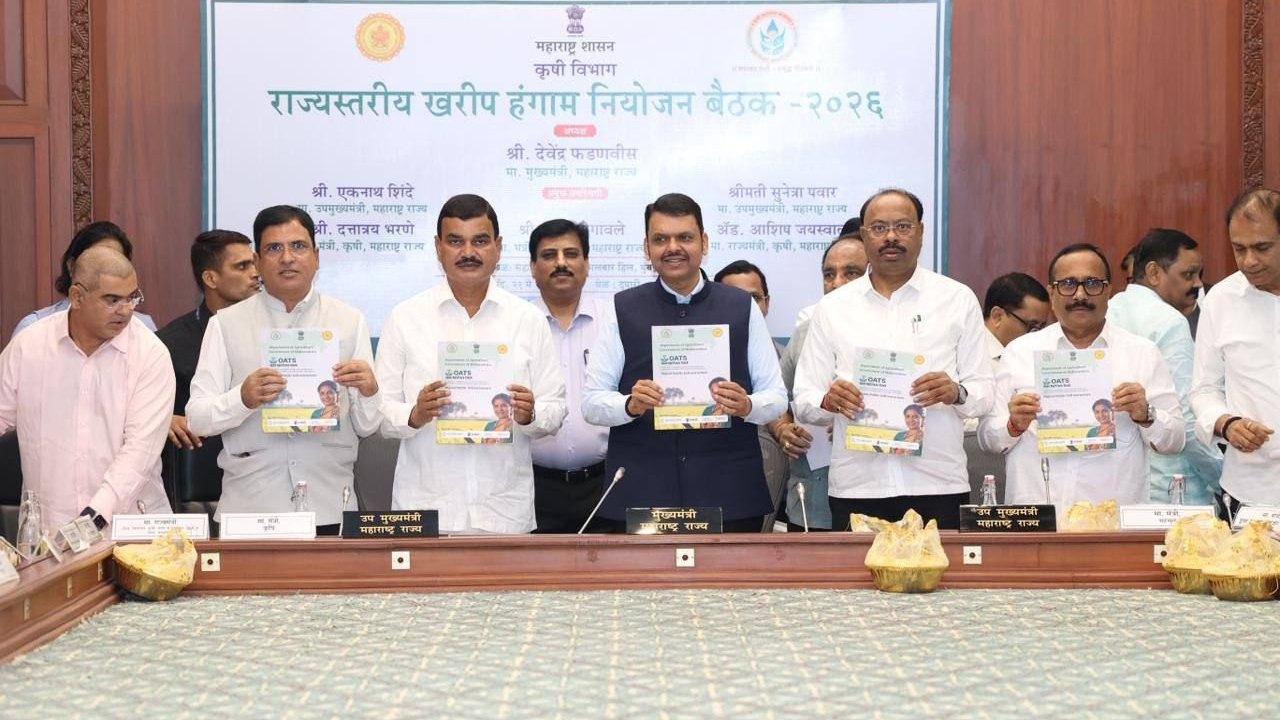
OATS is deliberately not a product. In the Blueprint's own words, it is “a modular composition of specifications, frameworks, standards mappings, and implementation guidance from which any government, multilateral, or implementing consortium may select the modules relevant to its context. It is not a product, not a platform, and not a single vendor's stack.”
The architecture is described as a five-plus-one layer hourglass. At the base sits identity: every farm, processor and consignment gets a GS1 Global Location Number or Global Trade Item Number, anchored to digital identifiers such as MOSIP or AgriStack. Above that sits events: the ten Critical Tracking Events (harvest, aggregation, processing, shipment and so on) recorded using GS1 EPCIS 2.0 (ISO-IEC 19987:2024), the same event grammar already mandated by the US FSMA 204, structured around a 45-element Key Data Element matrix. Above events sits interoperability: open, Beckn-derived protocols and OpenAPI 3.1, following a GovStack/X-Road style federation pattern, so a farmer's phone, an exporter's ERP, a customs system and a buyer's portal can all read and write to the same evidence trail. The fourth layer is trust: W3C Verifiable Credentials 2.0 and decentralised identifiers, with Hyperledger Fabric used to hash-anchor records, so only cryptographic hashes sit on a public ledger while the underlying data stays federated and private. The fifth layer is applications, left open for the market to build branded experiences, supply-chain finance products and consumer-facing tools. The “plus one” is AI, layered across the stack to flag fraud, predict outbreaks and optimise logistics.
- Open by default: published for anyone to build on, not licensed back to the governments that commissioned it.
- Federated and decentralised, rather than a single central database any one party controls.
- Technology- and vendor-neutral, so no government is locked into one company's stack.
- Sovereign by design, with data residency in India and consent-first data flows aligned to India's DEPA framework and the Digital Personal Data Protection Act, 2023.
- Zero cost to the farmer at the point of use: enrolling a plot, recording a harvest or generating a lot QR code carries no subscription, transaction fee or licence cost.
The Blueprint frames itself explicitly against the G20's own 2023 definition of Digital Public Infrastructure and the G20 Digital Economy Ministers' principles, and it is designed to be jurisdiction-neutral: two conformance tiers, OATS-Core and OATS-Standard, let a state or country adopt only as much of the stack as its existing digital maturity supports, with a phased playbook of co-design, a pilot in one or two export corridors, and then scale.
The full Blueprint is published under a Creative Commons Attribution 4.0 International licence. Any government, multilateral institution, standards body, academic institution or implementing consortium can use it, adapt it, translate it or build on it without seeking permission or paying a licence fee.