TRST01Veritas

The Climate Trust & Verification Platform

TRST01Veritas is a sovereign-grade digital platform designed to enable verifiable climate action across the Global South, where climate ambition is high, impact potential is significant, and the need for trusted digital infrastructure is most urgent


Built for the New Renewals of Sustainability – 2026

The global sustainability landscape has fundamentally shifted. Climate action is no longer evaluated solely on intent or voluntary disclosure. Governments, markets, and financiers now require continuous proof, transparent data, and sovereign-aligned systems.
TRST01Veritas is built for this reality.
Aligned with the New Renewals of Sustainability – 2026, the platform moves climate systems:
  • From promises to proof
  • From projects to infrastructure
  • From reporting to systems of record
The platform empowers countries and institutions to participate credibly in global climate mechanisms without compromising national ownership or policy alignment.
Key Principles

1. Sovereign-Grade Governance

TRST01Veritas is architected to operate at national and sub-national scales, with clear data ownership, access control, and governance frameworks aligned to sovereign requirements. The platform supports government-led oversight, ministry-level permissions, and audit-ready controls, ensuring climate data remains under national authority while meeting international transparency expectations.

2. Interoperability with Global Standards

TRST01Veritas is designed to integrate seamlessly with global climate, carbon, and sustainability standards. It supports structured data exchange with international registries, reporting systems, and compliance frameworks, enabling countries and enterprises to align with evolving Article 6, voluntary carbon markets, ESG disclosures, and cross-border verification requirements without data silos.

3. Scalability from Pilots to National Programs

Unlike fragmented pilot tools, TRST01Veritas is engineered to scale. The same architecture that supports a single project or sector can be expanded to national registries, multi-sector climate programs, and cross-country initiatives without redesign. This ensures continuity, consistency, and long-term viability as programs mature.

4. Trust-by-Design Architecture

Trust is embedded into TRST01Veritas at the system level. Every data point is traceable, time-stamped, and verifiable, with immutable audit trails that withstand regulatory review, financial due diligence, and legal scrutiny. AI-assisted validation, rule-based checks, and tamper-resistant records ensure integrity with Blockchain Immutability from data capture through issuance and settlement.

A Platform Designed for the Global South

The Global South sits at the center of the global climate response, home to critical ecosystems, emerging carbon markets, and growing demand for climate finance. Yet, these regions often face structural barriers: fragmented data, limited MRV capacity, and a lack of trusted digital registries.
TRST01Veritas addresses this gap by delivering:
  • Sovereign-ready digital infrastructure adaptable to national and sub-national contexts
  • Low-friction scalability, enabling adoption across diverse geographies and capacities
  • Global interoperability, ensuring alignment with international markets and frameworks
The platform empowers countries and institutions to participate credibly in global climate mechanisms without compromising national ownership or policy alignment.

What TRST01Veritas Enables

AI and Blockchain Driven Digital MRV (dMRV)

TRST01Veritas delivers continuous, AI-enabled Monitoring, Reporting, and Verification by integrating geospatial intelligence, automated risk detection, and audit-ready data pipelines. This replaces manual, episodic verification with real-time climate assurance at scale.

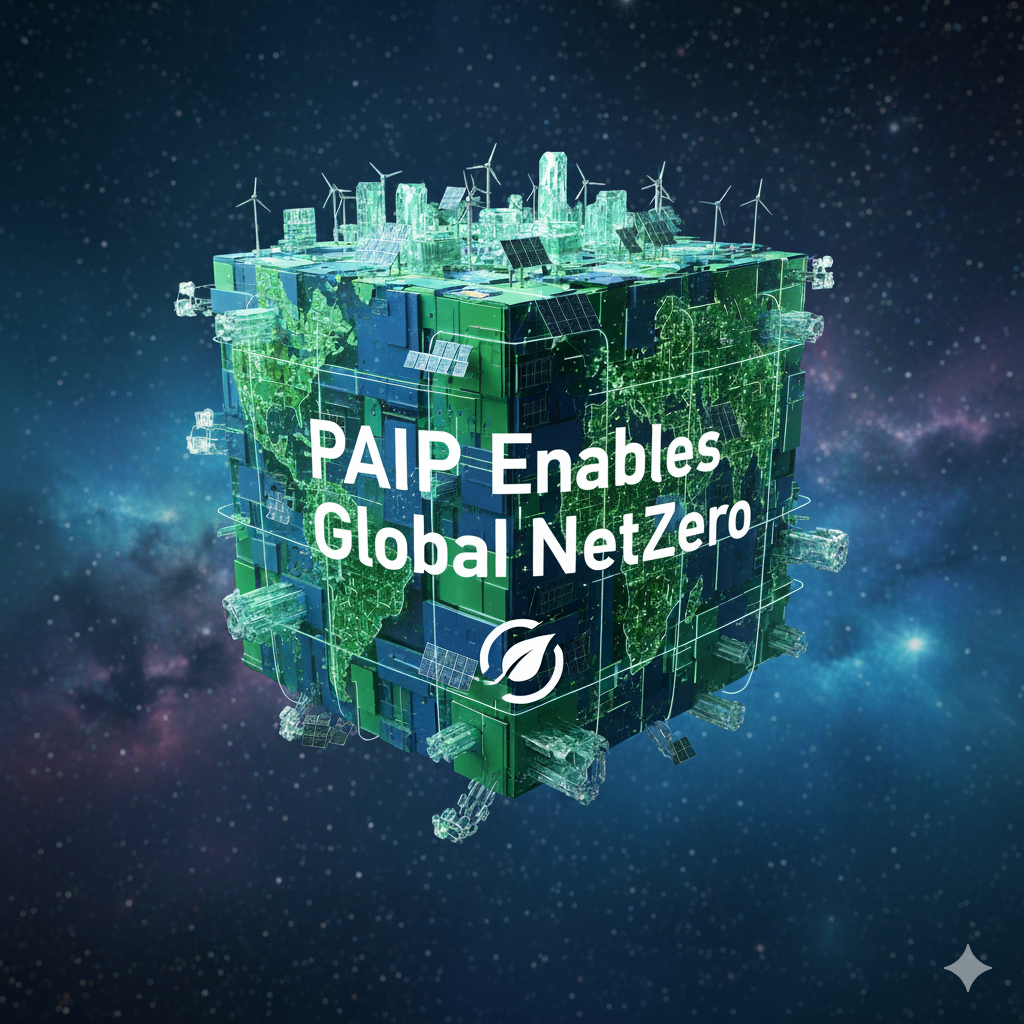
Paris Agreement Implementation Partner (PAIP) Infrastructure

TRST01Veritas functions as a digital backbone for Paris Agreement implementation, supporting alignment with NDCs, UNFCCC reporting, and national climate strategies. Climate data flows are integrated with policy, treasury, and institutional systems—ensuring climate action is embedded, not siloed.

End-to-End Carbon Market Systems

The platform enables trusted carbon market operations, including issuance, transfer, and retirement of credits, with Article 6.2 / ITMO-ready workflows. Unique digital identifiers and transparent lifecycle tracking eliminate double-counting and strengthen market credibility.

Our dMRV projects

Project AWD-Paddy

Paddy cultivation is laborious, water-intensive, and methane-emitting because of excess use of water and Fertilizer. It is estimated in India there is a 60% excess use of water than is required. In the state of Telangana, our partner Sow and Reap launched project Varri estimated to cover farm land of 50,000 hectares by end of 2023 and 2,50,000 hectares by the end of 2026. Project Varri aims to revolutionize water conservation and methane reduction through sustainable cultivation methods such as the Alternate Wetting and Drying Process (AWD). AWD cuts water usage by almost 40% and 4-5 tons equivalent of carbon emissions per hectare.

Project Miyawaki

With concrete jungles taking over our cities, it is important to bring back more green spaces for better health and compensate for planet warming emissions from urban complexes. Miyawaki is an urban micro-forest that adopts the technique of a Japanese botanist, Akira Miyawaki, who, in the 1970s, began to plant young native plant species – trees, shrubs, and grasses – ones that would naturally grow in that region without human interference, thus attempting to restore degraded lands and fight climate change. Planting saplings close to one another encourages growth as they compete for light (High-Density Planting). Miyawaki forests are self-sustaining and grow in two to three years. They contribute to the reduction of air and noise pollution, the cooling of concentrated heat islands, attracts local wildlife and creates carbon sinks. Miyawaki projects encourage afforestation. Some researchers found that in India Miyawaki forest can sequester about 50 metric tonnes of carbon dioxide per hectare over the course of ten years. Hyderabad’s Stone Craft Woods is the largest Miyawaki project in India spread over 18 acres with TRST01 as their consulting technology partner. This methodology can be on-Chained on blockchain to measure the reduction of GHG emissions.

Project Biogas

Poultry manure generated at farms is generally left to decompose at and around farms in an aerobic environment. This project is an attempt to convert organic waste into biogas for financial and environmental benefits. Project Biogas is a bio-gas to energy initiative in Siddipet, Telangana, that captures biogas from poultry manure via anaerobic digestion and uses it to generate electric energy using biogas systems. The biogas power plant where the proposed project activity is being carried out has two biogas engines installed with a total capacity of 1,500 m3 (17,044 KWe/h). This means that the biogas generator system that will be installed will have a total power capacity of 43,200 kWeh per month. An estimated 525,600 KWh of power is produced each year. The energy generated by the biogas unit is fed into the power grid.

Start your carbon project with our dMRV solution today!

Featured posts